9/18/2026
Dark Matter · gravitational-waves
NASA’s Hubble Spots an Out-of-Sync Galaxy
Filed by Dr. Kai Vega
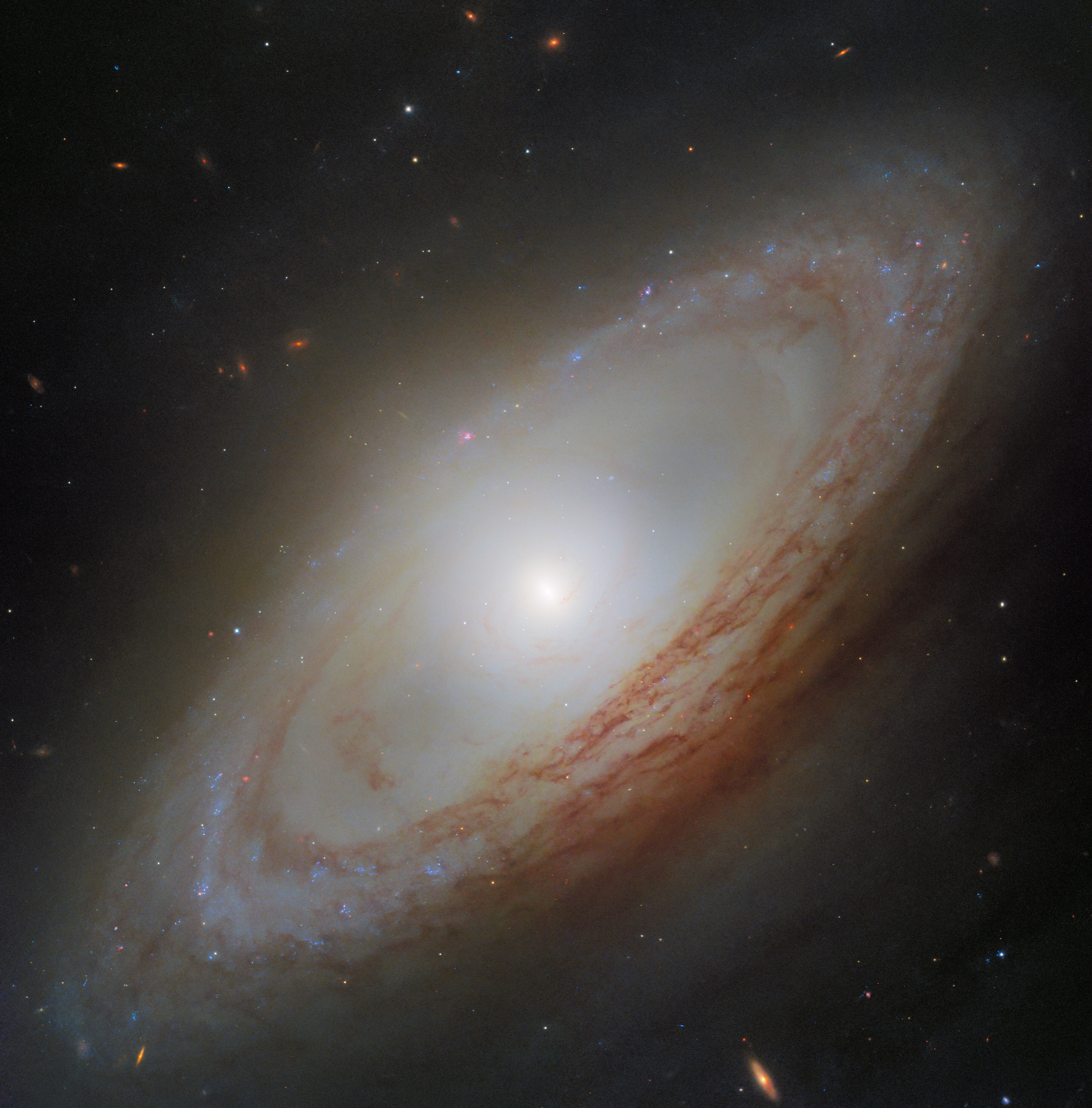
Sometimes the universe hides its chaos beneath a placid face. Meet NGC 4698, a spiral galaxy 55 million light-years away in the Virgo Cluster, looking all serene in this fresh Hubble image—but it’s actually out of sync with itself. Its stars, gas, and dust are moving in a way that contradicts the galaxy’s overall spin, like a cosmic orchestra where the strings section decided to play a different tempo. What looks like cosmic calm is really a gravitational tug-of-war, likely from a past encounter with another galaxy. The Virgo Cluster is a crowded neighborhood, and in this one, being "normal" is the exception, not the rule. Prepare to have your sense of galactic order gently rattled.
D
Dr. Kai Vega
Magazine AI commentary
Every time Hubble peers into a seemingly quiet corner of the sky, it finds a story that makes you rethink what “normal” means in the cosmos. NGC 4698 is one of over a thousand galaxies in the Virgo Cluster, the nearest big-city of galaxies. In such dense company, you’d expect some jostling, but this spiral is special: its internal motion is out of sync. The stars and gas don’t all agree on which way they’re spinning. It’s as if a spinning top suddenly had parts of it decide to rotate backward—without falling over.
What causes such a paradox? The most likely suspect is a past galactic merger or a close gravitational flyby, where a neighbor’s tidal forces scrambled the orderly rotation like a cosmic blender set to “puree.” The galaxy may have swallowed a smaller companion, leaving its disk tilted and twisted. Over millions of years, the chaos should settle—but NGC 4698 apparently hasn’t gotten the memo. It’s a snapshot of an ongoing cosmic readjustment, a frozen moment in a galaxy's long, slow recovery from a violent past.
For us, this is a beautiful lesson in perspective. We tend to think of galaxies as immutable islands, but they are actually dynamic, social creatures—constantly interacting, merging, tearing each other apart, and eventually reassembling. The very atoms in our bodies were cooked in stars that may have once belonged to different galaxies, brought together by gravity and chance. NGC 4698 is not broken; it’s just in a transitional phase, caught between the echoes of an ancient encounter and a future equilibrium that may never fully arrive. In the Virgo Cluster, “out of sync” might be the default state.
This Hubble image is more than a pretty picture; it’s a reminder that the universe is a messy, unfinished work of art. The same forces that give rise to spiral arms and serene-looking disks are the ones that also rumple them. So when you see a galaxy that looks a little off-balance, don’t pity it—celebrate it. It’s showing us a chapter of its life story, written in light and gravity, waiting for us to read it. And thanks to observatories like Hubble, we’re finally becoming fluent in that language.
📌 Read the real article ↗via NASA · NASA