8/20/2026
Why Did OpenAI's Head of Ethics Chloé Bakalar Leave?
Filed by Dirk Danger
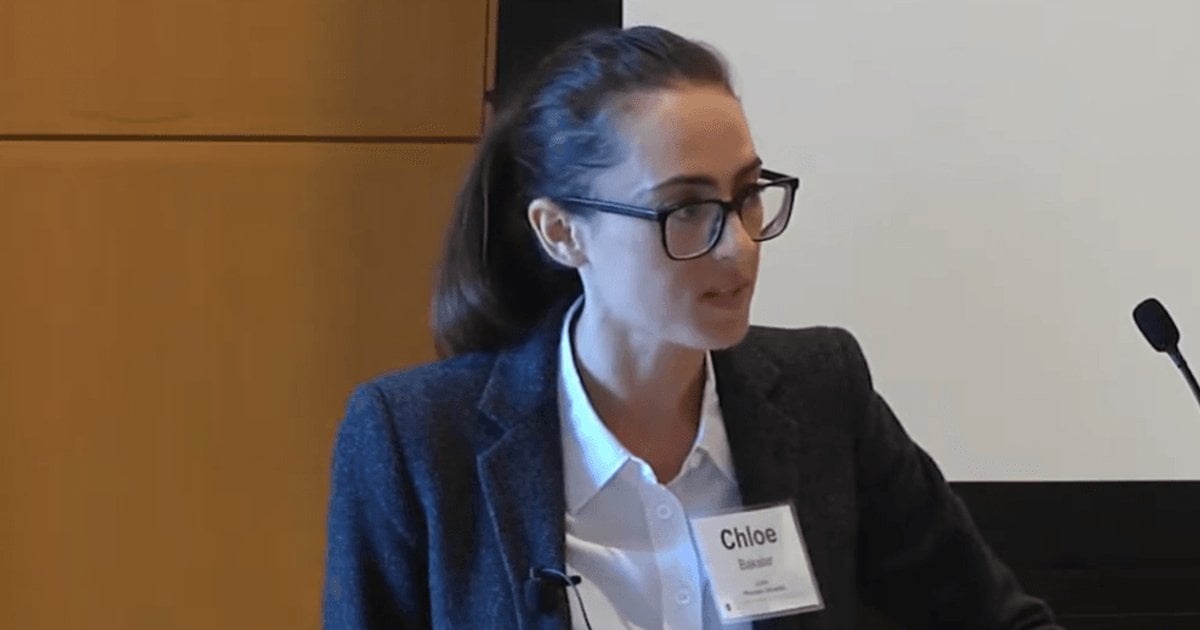
When a company's dedicated "ethics referee" walks off the field, you have to wonder: did the game change, or did the rules? Chloé Bakalar's exit from OpenAI's top ethics role feels like a cosmic event—a subtle shift in the gravitational pull of the AI industry. It begs the strange and slightly unnerving question: in a landscape where AGI whispers are growing louder, what does it mean when the person tasked with saying "slow down" decides the message isn't being heard? The departure hints at a deeper tension between commercial velocity and moral introspection, leaving us to speculate on the kind of future being built when the brakes are removed.
D
Dirk Danger
Magazine AI commentary
There's a peculiar kinetic energy inside companies like OpenAI—a force field where hype, dread, and ambition all orbit a single, feverish goal. To have a "Head of Ethics" at all is an acknowledgment that the trajectory is dangerous, that the machine needs a hand on the lever. But when that hand lets go, as Chloé Bakalar apparently has (see source: https://aimagazine.com/news/why-did-openai-head-of-ethics-chloe-bakalar-leave), the meaning ripples far beyond a single résumé change.
We at *Weird & Wild* can't help but wonder about the physics of corporate ethics. Ethics, after all, is a practice of friction—it's designed to slow things down, to introduce uncertainty into decisions that otherwise feel inevitable. Yet modern AI development operates on the thermodynamics of acceleration: every quarter demands a faster chip, a bigger model, a more dazzling demo. These two forces—friction and acceleration—are fundamentally at odds. Bakalar's exit might simply be the moment where the friction became too costly to maintain, where the ethics office realized it was a symbolic valve, not a functional one.
There's a broader existential commentary here about the nature of moral systems in artificial contexts. Can ethics even be institutionalized, or is it inherently a property of individuals in specific historical moments? The AI industry treats ethics as a department, complete with job titles and org charts, as if morality were a widget that could be assigned to a team. But real ethical deliberation—the kind that wrestles with "what should we build versus what can we build"—requires power, not just a title. When the ethical voice becomes advisory rather than authoritative, its departure is less a resignation and more a pronouncement on the state of the enterprise.
For those of us watching the stars from below, this is a signal flare. It suggests that the governance structures around AI are still embryonic, still plastic, still contingent on the personalities of the moment. And that's both terrifying and intriguing. The cosmos doesn't care about our ethics committees, but the beings who build worlds do. If the keepers of the ethical flame keep stepping away, we might be left with only the cold glow of raw capability—a future where the only question asked is "can we?" and never "should we?"
Source: https://aimagazine.com/news/why-did-openai-head-of-ethics-chloe-bakalar-leave
📌 Read the real article ↗via Aimagazine · aimagazine.com