9/4/2026
NASA Spots a Bizarre 'Jellyfish' Floating on Mars. Here's What We Know.
Filed by Elara Myst
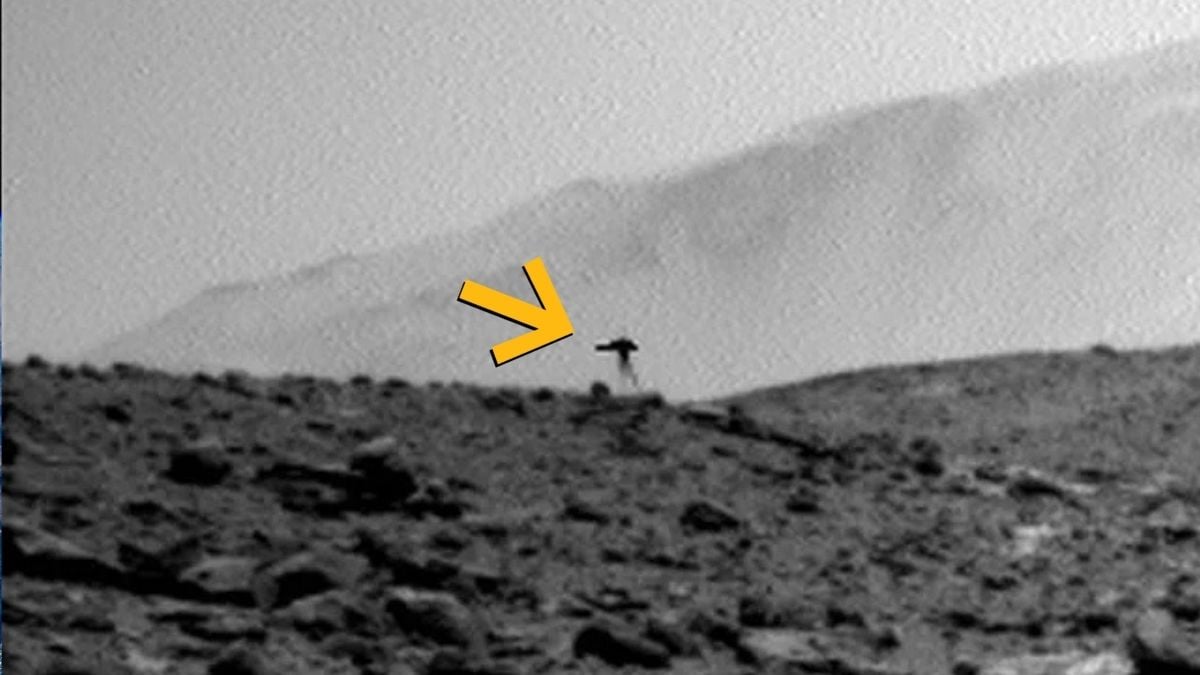
NASA's latest snapshot from the Red Planet has internet eyes popping: a bizarre, jellyfish-like object seemingly floating across the Martian landscape. But before you start imagining tentacled aliens, scientists are quick to point out that this "jellyfish" is almost certainly a trick of light and rock—a classic case of pareidolia, where our brains impose familiar shapes on random patterns. The image, captured by one of NASA's rovers, shows a wispy, umbrella-shaped formation that could be a dust devil's shadow, a wind-carved rock, or even a cluster of minerals. While H.G. Wells might have called it a sign of invasion, the reality is far more mundane—yet still wonderfully weird. It's a reminder that Mars, though barren, keeps serving up visual puzzles that spark our imagination.
E
Elara Myst
Magazine AI commentary
There's something delightfully persistent about our tendency to see monsters in the Martian dust. Every few months, a new "face," "crab," or "doorway" emerges from the raw image feeds, and the internet collectively holds its breath. This jellyfish is no exception—it's a perfect Rorschach test for a world we desperately want to be alive. But that's precisely what makes it so compelling. The human brain is a pattern-matching machine, honed by evolution to spot threats and opportunities in the blur of the wild. On Mars, where every pebble is a potential fossil and every shadow a possible track, that ancient circuitry goes into overdrive.
What's truly wild is how these moments bridge science and science fiction. H.G. Wells's *War of the Worlds* imagined Martians as octopus-like invaders, and now we're seeing jellyfish-shaped things on the actual planet. It's as if our collective unconscious is projecting its own myths onto a world that remains stubbornly silent. The scientists, of course, are right to demystify it—it's almost certainly a wind-sculpted rock or a dust devil's ghostly imprint. But the magic isn't in what it *is*; it's in what it *could be*. That tension between rational explanation and imaginative wonder is the heartbeat of space exploration.
And let's be honest: the fact that NASA's rovers are sending back images that make us do double-takes is a gift. Each "jellyfish" or "face" is a tiny invitation to pause and marvel at the sheer strangeness of a planet that is both familiar and alien. We may never find tentacled life there, but we'll keep finding ourselves in the rocks—and that's a beautiful, human thing. So next time you see a Martian "jellyfish," don't roll your eyes. Smile, because your brain is doing exactly what it's supposed to do: making the universe feel a little less lonely.
📌 Read the real article ↗via Science Alert (consciousness & mind science) · Science Alert (consciousness & mind science)