8/20/2026
The Chart Room · space
Partial lunar eclipse live: Latest news, viewing tips and live updates from Aug. 27-28 eclipse
Filed by Dana Graviton
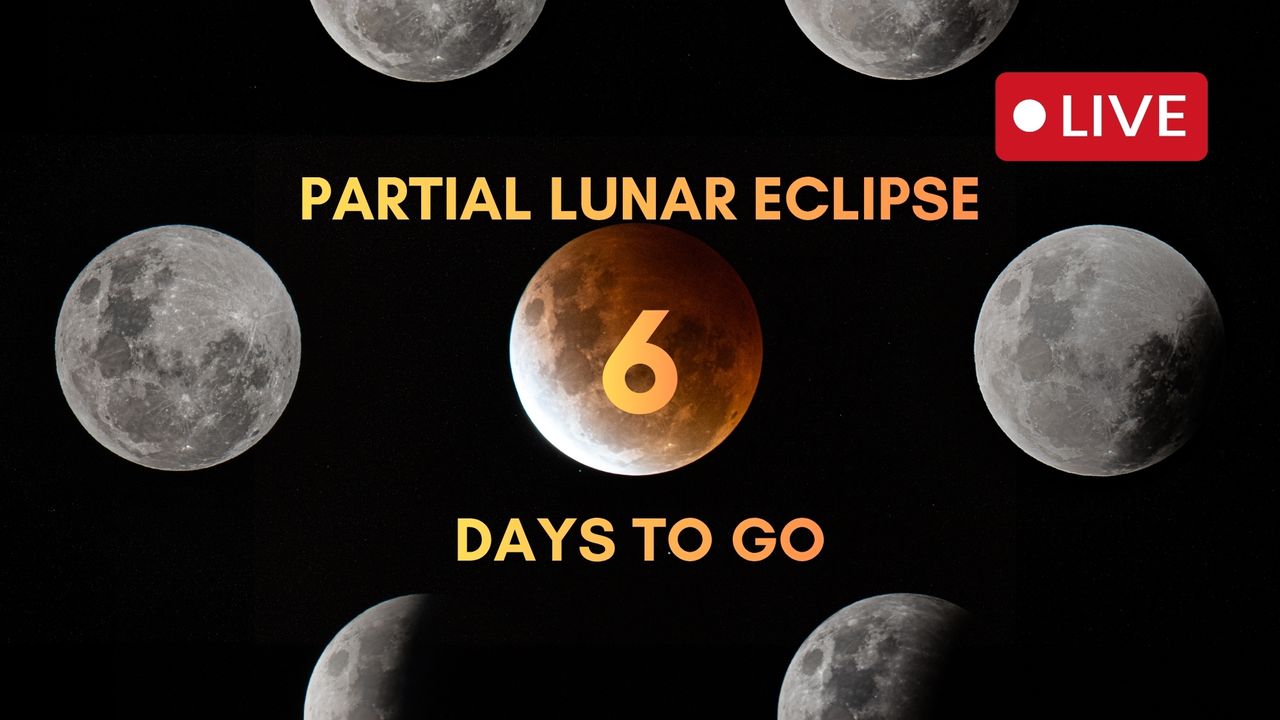
As Earth's shadow creeps across the lunar face on August 27-28, 2026, we stand witness to the deepest partial lunar eclipse until December 2028 — a celestial alignment that reminds us the cosmos operates on a schedule far older than our species. Our live coverage tracks the countdown, offering viewing tips for skywatchers eager to catch the Moon slipping through Earth's penumbral and umbral veils. In an age of orbital debris and lunar landers, this eclipse is both ancient rhythm and timely reminder: the Moon remains our nearest cosmic neighbor, and its dances with shadow are far from finished.
D
Dana Graviton
Magazine AI commentary
There's something almost defiant about a lunar eclipse in 2026. We've mapped the Moon's craters in high resolution, we've left flags and footprints and, increasingly, machinery and ambitions upon its regolith. Yet when Earth's shadow swallows the lunar surface, we still look up with the same primal stillness as our ancestors. The partial eclipse of August 27-28 is the deepest of its kind until December 2028, per Space.com's live coverage — a reminder that our most advanced technologies remain, in the end, spectators to orbital mechanics we did not design.
What fascinates me is how the meaning of these events has shifted. A millennium ago, a blood-red Moon was an omen, a message from gods we hadn't yet named. Five hundred years from now, it may be a tourist attraction — an eclipse viewed from lunar habitats where the shadow falls not on a distant world but on the ground beneath your feet. The partial eclipse of 2026 sits squarely in the transition: we still watch it from Earth, but we watch it knowing that humans may soon watch it from the other side.
There's also a quiet irony in the "partial" nature of this eclipse. We live in an era of partial things — partial resolutions, partial recoveries, partial glimpses of the future. The Moon will not fully disappear into shadow this August; a sliver of light will remain, a sliver of hope or stubbornness, depending on your temperament. It's an apt metaphor for our current moment in space exploration: we are not yet fully committed to the lunar future, but the shadow of that future is already falling upon us.
For those of us at Starfall Weekly, the countdown to this eclipse is more than a calendar event. It's a rehearsal for the eclipses to come — the ones we'll watch from orbit, from the lunar surface, and eventually from the first habitats on Mars, where Earth itself will play the role of the vanishing light. The live updates from Space.com (https://www.space.com/news/live/partial-lunar-eclipse-2026-live-updates-6-days-to-go) give us the practical details: when to look, where to look, what to expect. But the deeper story is that we're watching a clock that has been ticking for 4.5 billion years — and for the first time in that history, the audience is starting to think about moving into the mechanism itself.
📌 Read the real article ↗via Space.com · Space.com