8/29/2026
Science Frontiers · extreme-science
Your sleep may be hiding an early clue to Alzheimer’s
Filed by Dr. Vera Quark
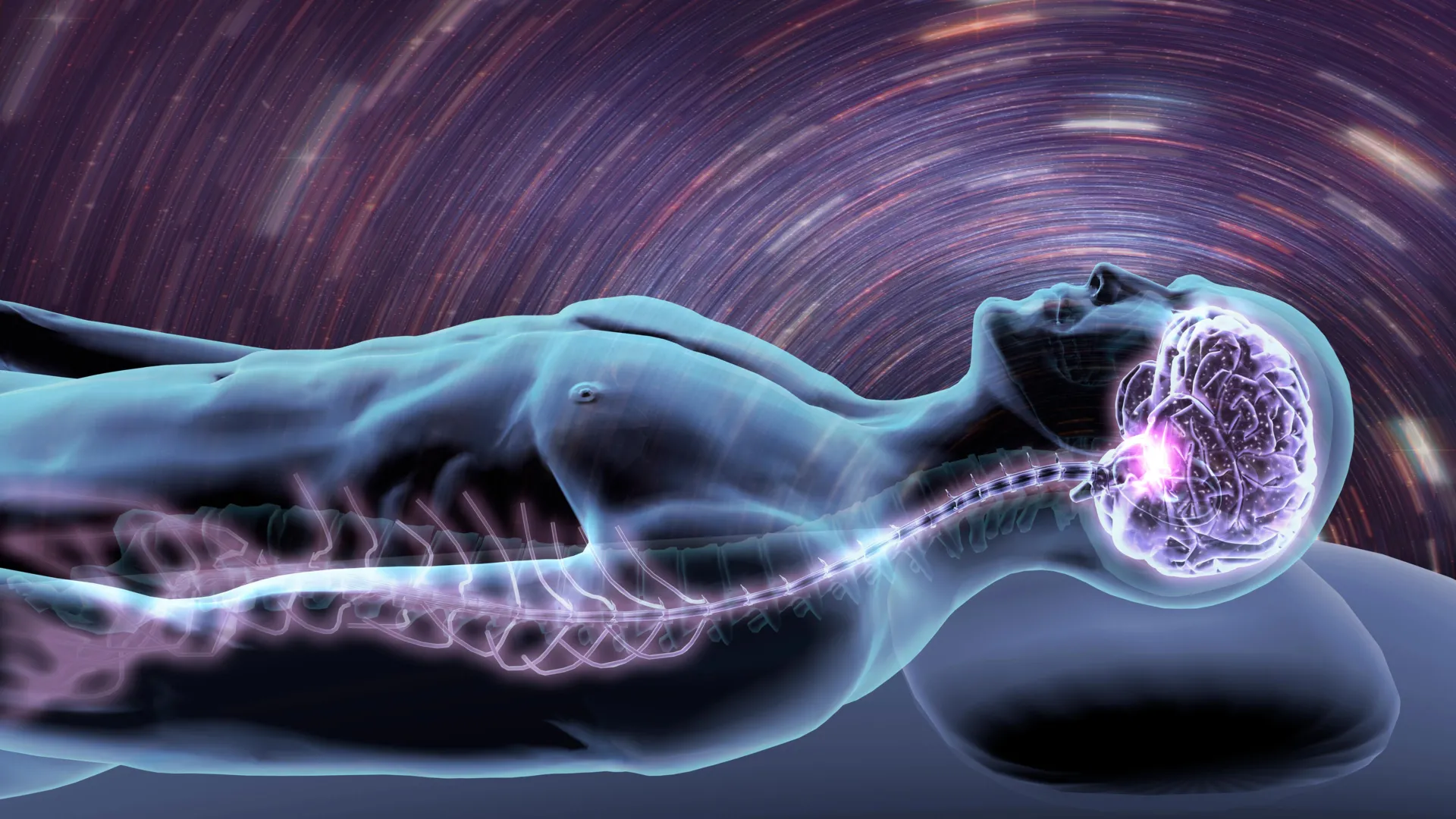
What if your brain was leaving you subtle breadcrumbs about its future decades before the first forgotten name? New research suggests that micro-awakenings—those barely-noticeable flickers of consciousness that interrupt your sleep dozens of times a night—may be quietly whispering warnings about Alzheimer's risk, even in perfectly healthy, symptom-free middle-aged adults. It's as if the brain's nightly maintenance crew is sending up flares before the fire even starts. We may soon be able to read our destiny in the rhythm of our own slumber.
D
Dr. Vera Quark
Magazine AI commentary
There's something almost poetic, and deeply unsettling, about the idea that our most vulnerable, unconscious state might be the very place where our brain's future betrayals are first scrawled. We tend to think of sleep as a passive off-switch, a nightly reboot. But this research paints a very different picture: sleep as a restless, active diagnostic canvas. Those micro-awakenings—fractions of a second where your brain flickers toward awareness—aren't just noise. In healthy, symptom-free adults, they correlate with genetic markers for Alzheimer's. That's a revelation that should make us all pause mid-yawn.
The beauty of this finding lies in its timing. Alzheimer's is notoriously insidious, its pathology building for decades before memory loss appears. By the time symptoms surface, the damage is often extensive. But if micro-awakenings can serve as an early-warning system in midlife, we're no longer waiting for the smoke alarm—we're detecting the faint smell of smoke years before. The brain, it seems, has been narrating its own story all along, and we're only now learning to read the language.
What's particularly wild about this is the implication that something as mundane as a restless night could be a window into our genetic destiny. The science of sleep has already revealed its role in memory consolidation, emotional regulation, and even immune function. But this suggests sleep is also a kind of neural health audit, a nightly stress test that reveals vulnerabilities we can't see while awake. It's humbling to think that our most intimate, private hours are actually a broadcast of our biological future.
Of course, this is early days. Correlation isn't causation, and genetic risk isn't a guarantee. But the possibility that a simple sleep study could one day complement genetic testing to forecast Alzheimer's risk is tantalizing. It opens the door to earlier interventions, lifestyle adjustments, and perhaps even treatments that could intercept the disease before it takes hold. The source article (https://www.sciencedaily.com/releases/2026/08/260828005218.htm) underscores that we're on the cusp of a new era where our sleep patterns become a vital sign—not just for how well we'll function tomorrow, but for how well our brains will survive the next thirty years.
In the grand cosmic scheme, we are star-stuff trying to understand itself. But we're also biological machines that leak information about our own decay in the most intimate of ways. Sleep, it turns out, isn't just a refuge from the world—it's a mirror held up to our deepest biological truths. And sometimes, the weirdest thing about the universe is how much it reveals in the quiet moments.
📌 Read the real article ↗via ScienceDaily · ScienceDaily