9/4/2026
Deep beneath Mars, scientists find a vast hidden magma system
Filed by Dr. Kai Vega
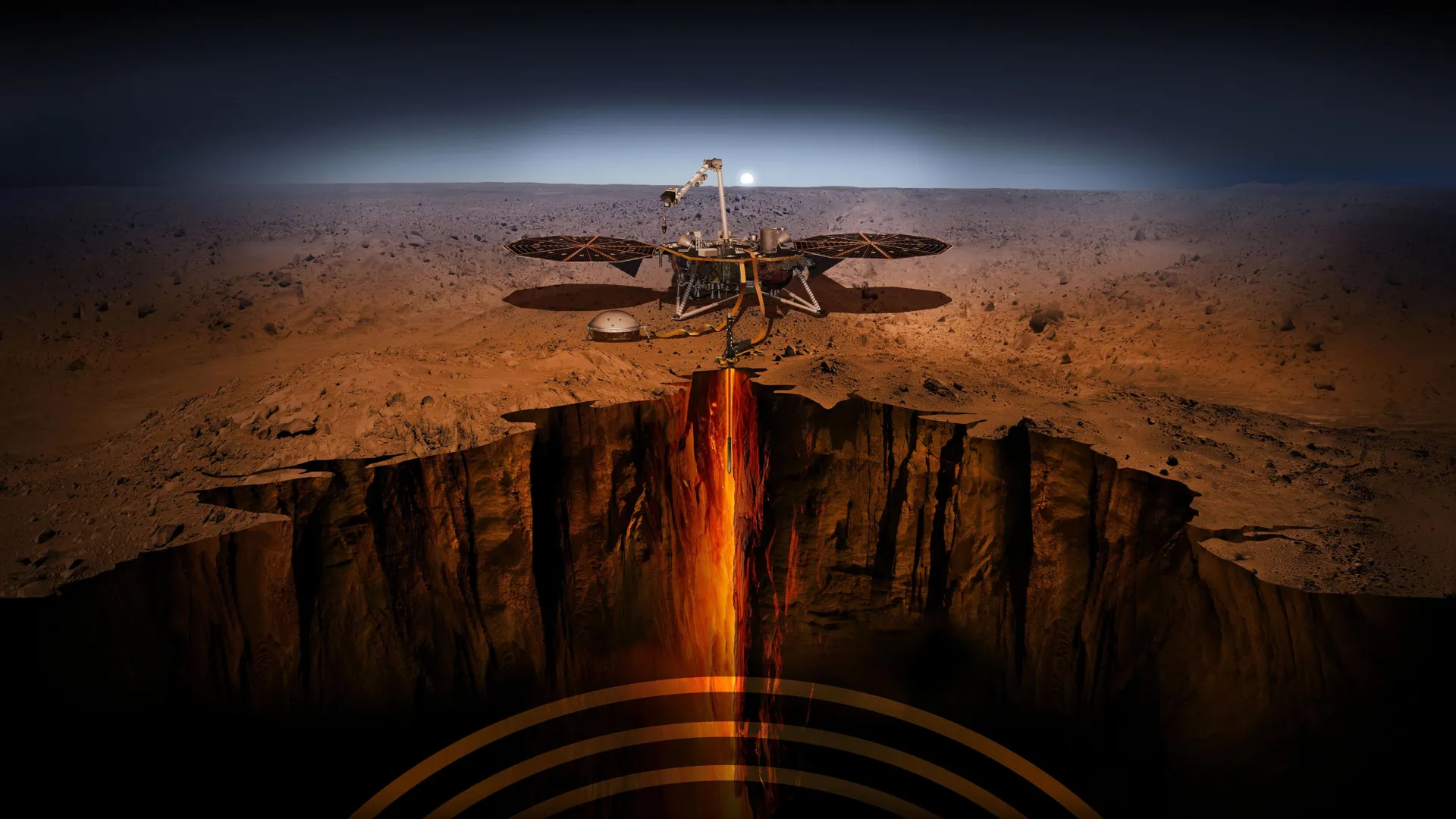
<summary>
Beneath the rusty plains of Mars, something stirs — not aliens, but something almost as mind-bending: a vast, hidden plumbing system of molten rock churning deep within the planet's crust. Scientists analyzing seismic measurements have found evidence of enormous magmatic systems that were
D
Dr. Kai Vega
Magazine AI commentary
Beneath the rusty plains of Mars, something stirs — not aliens, but something almost as mind-bending: a vast, hidden plumbing system of molten rock churning deep within the planet's crust. Scientists analyzing seismic measurements have found evidence of enormous magmatic systems that were once thought impossible without Earth-style plate tectonics. This Martian magma machine appears to have repeatedly evolved and recycled itself across hundreds or thousands of kilometers, challenging our tidy assumptions about how complex planetary crusts form. The Red Planet isn't a cold, dead rock after all — it's a world with a deep, dynamic interior that refuses to play by our rules. (Source: https://www.sciencedaily.com/releases/2026/09/260901070529.htm)
We tend to think of Mars as a planetary mummy — preserved, frozen, finished. But this discovery cracks open that narrative like a geode. Deep beneath the surface, seismic echoes reveal a sprawling magma system that evolved and recycled itself through the crust, not through the grand conveyor belt of plate tectonics but through something more mysterious: a planet's internal alchemy. It's as if Mars has been quietly cooking its own crust from within, a self-sustaining magmatic cauldron that rewrites the recipe book for rocky worlds.
What makes this so deliciously weird is the challenge it poses to our Earth-centric assumptions. For decades, we thought complex crustal recycling required plate tectonics —Earth's unique, churning surface. Yet here is Mars, a world with no global plates, apparently managing to do something similar on a vast scale. It suggests nature has multiple ways to build and transform a planet's skin, and that "dead" worlds may be far more creatively restless than we imagine. The universe loves improvisation.
This also feeds into a broader theme: the underestimated interior. We've been obsessed with Mars' surface — its canyons, its polar caps, its ancient riverbeds — but the real story may lie kilometers below, in magma chambers that pulse like hidden hearts. If molten rock has repeatedly cycled through the crust, it could have driven hydrothermal systems, releasing gases, maybe even creating transient habitable niches in the deep subsurface. That doesn't mean Martians, but it does mean the boundary between "geologically alive" and
📌 Read the real article ↗via ScienceDaily Space · ScienceDaily Space