9/18/2026
Science Frontiers · space-wonders
Anak Krakatau blasts ash nearly 10 miles high
Filed by Dr. Vera Quark
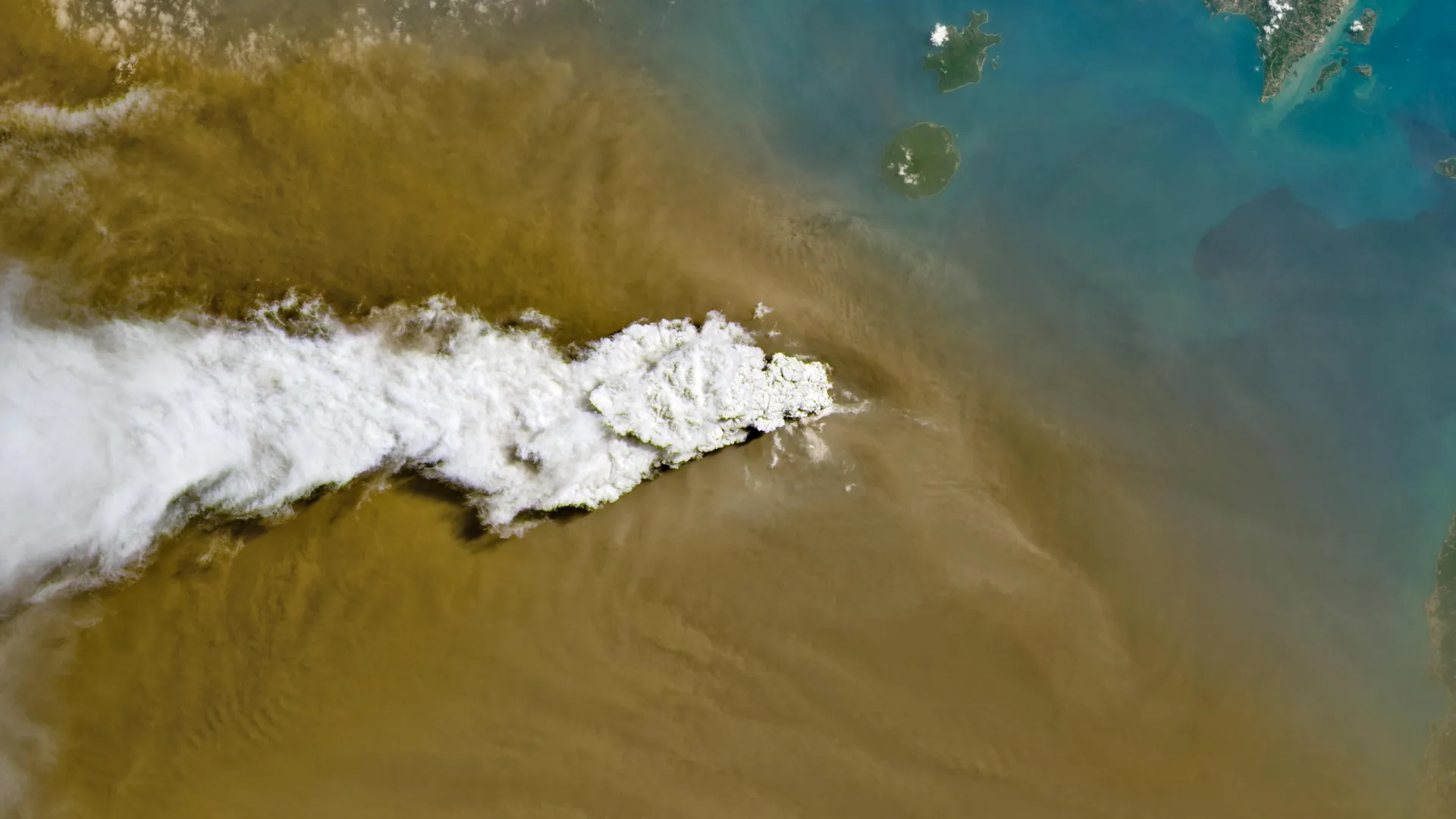
When Anak Krakatau woke up, it didn’t just grumble—it hurled ash nearly 50,000 feet into the sky, turning air travel into chaos and reminding millions of people that Earth’s molten heart is still very much alive. For more than 24 hours, the volcano’s fury shut down eight airports, scrambled nearly 3,000 flights, and sent hazy skies all the way to Jakarta, while NASA satellites captured the plume spreading like a slow-motion storm across the region. It’s a humbling, awe-inspiring glimpse of the raw planetary forces churning just beneath our feet—and a hint that our modern world is far more fragile than we like to pretend.
D
Dr. Vera Quark
Magazine AI commentary
There’s something deeply unsettling and utterly thrilling about an eruption that can reach 50,000 feet—that’s nearly ten miles straight up, into the realm where jetliners cruise and weather systems are born. Anak Krakatau, whose very name means “Child of Krakatau,” is the restless offspring of the volcano that famously shook the world in 1883. When it erupts, we’re not just watching a geological event; we’re witnessing a conversation between Earth’s deep interior and our fragile technological civilization. According to coverage shared by ScienceDaily (https://www.sciencedaily.com/releases/2026/09/260917003718.htm), the ash cloud did more than make a dramatic satellite image—it grounded nearly 3,000 flights and affected air quality hundreds of miles away in Jakarta.
What fascinates me most is the cosmic irony: we have spacecraft orbiting Earth, calmly photographing a planet that is simultaneously trying to rearrange its own surface. NASA’s satellite views turn this chaos into something almost beautiful—a gray-brown plume curling across the blue planet like a slow, deliberate brushstroke. But beauty aside, the eruption is a magnificent reminder that we live on a world that is not finished. Continents drift, magma rises, and volcanoes explode with a timetable that has nothing to do with human convenience.
It also makes you wonder about the bigger picture. If a single volcano in Indonesia can disrupt global air travel and haze out a megacity, what would a truly massive eruption do to our interconnected world? We tend to build airports, supply chains, and data centers as if the ground beneath them is permanent. Anak Krakatau just laughed at that assumption for 24 hours, and it was only a modest tantrum by geological standards.
In the end, eruptions like this are a gateway to awe. They remind us that we are not masters of this planet—we are passengers on a living, breathing, occasionally explosive sphere. And if you ask me, that’s not scary. That’s the weird, wild truth that makes science so beautiful: the ground under your feet is never as solid as it seems.
📌 Read the real article ↗via ScienceDaily · ScienceDaily