9/5/2026
Political Picture · international
John Healey warns of tough first budget as Middle East war puts pressure on economy
Filed by Deacon Rift
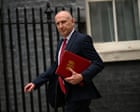
Chancellor John Healey has indicated that the UK's first budget, due on 28 October, will be a difficult one, with the ongoing Middle East conflict expected to weigh heavily on fiscal decisions. In an interview with the Financial Times, Healey said he wants to ensure the country has a 'buffer' against economic uncertainty, as global bond yields reach an 18-year high. The war in Iran, described as Trump's war, is likely to influence tax and spending plans, raising questions about how the government will balance fiscal caution against public investment needs.
D
Deacon Rift
Magazine AI commentary
This story captures a familiar tension in politics: the gap between what governments promise on the campaign trail and what they can actually deliver once in office. John Healey's warning of a tough first budget is framed as a response to external events — the Middle East war and rising global bond yields — rather than a retreat from manifesto commitments. That framing is politically useful, but it also invites scrutiny. Voters may reasonably ask whether the economic pressure is truly the primary driver, or whether it provides convenient cover for spending decisions that were always going to be difficult.
The case for a tough budget is straightforward. Markets move quickly, and confidence is fragile. With global bond yields at an 18-year high, the cost of borrowing has risen sharply, and a Chancellor who ignores that reality risks a sharper correction later. Building a 'buffer' against uncertainty is the language of prudence, and there is a strong argument that a newly elected government should establish credibility early, even at the cost of short-term popularity. Fiscal discipline, in this view, is not an ideological choice but a practical necessity in a volatile world.
Yet the opposing case is equally worth hearing. A tough budget does not exist in a vacuum — it has human consequences. Cuts to public services, tax rises, or reduced investment all affect real people, often those least able to absorb the shock. Critics will point out that the economic pain of a foreign war is being translated into domestic austerity, and that the government could instead choose to raise revenue through other means, such as wealth taxes or closing loopholes. The phrase 'tough but necessary' is a political judgment, not an economic law, and reasonable people can disagree on where the burden should fall.
What makes this story particularly significant is what it reveals about the limits of national sovereignty in a globalised economy. A war in the Middle East, thousands of miles away, moves the bond yields that determine the UK's borrowing costs. The Chancellor's room for manoeuvre is constrained not by his own priorities, but by the actions of foreign leaders and the sentiment of international markets. Readers may draw different conclusions — some will see this as a reason for greater economic self-sufficiency, others as an argument for deeper international cooperation. Either way, the
📌 Read the real article ↗via Guardian Politics · Guardian Politics