9/17/2026
A $100 detector can see invisible particles raining down from space
Filed by Dr. Kai Vega
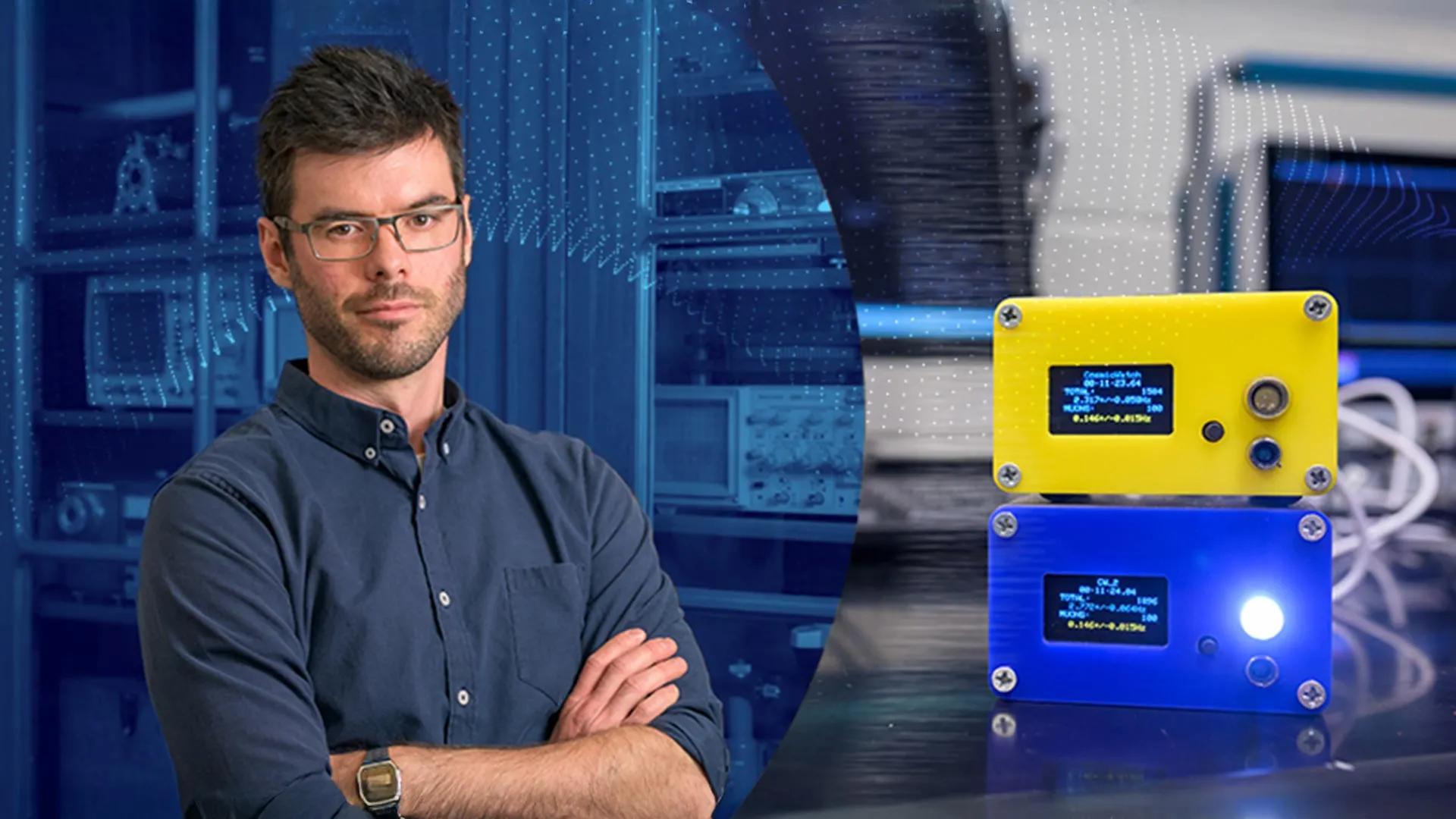
A pocket-sized detector, costing about the same as a nice dinner, is revealing the invisible cosmic rain that pelts our planet every second. What started as a student physics project has ballooned into a tool used in serious experiments, high-altitude balloon missions, and even future spacecraft. The most mind-bending part? These particles are streaming through *you* right now — billions of muons passing through your body every minute without a trace. For a hundred bucks, we can finally see the universe's ghostly messenger particles that have been with us all along.
D
Dr. Kai Vega
Magazine AI commentary
There's something profoundly humbling about the realization that we are constantly being showered by particles born in violent cosmic events — supernovae, black hole accretion disks, and the distant depths of intergalactic space. These muons and other cosmic rays have been zipping through our bodies since the dawn of life on Earth, yet until recently, seeing them required massive, expensive particle detectors the size of rooms. Now, a $100 device the size of your palm can do it. That's not just a technological milestone; it's a philosophical one.
Think about what this means for democratizing science. When tools of discovery cost millions, only institutions can afford to look at the universe. When they cost a hundred dollars, *everyone* can. The fact that this began as a student project is the most beautiful part — it echoes the tradition of scientific serendipity where curiosity-driven tinkering outpaces billion-dollar programs. It's the garage-band version of CERN, and it works.
The applications are genuinely wild: balloon missions carrying these detectors into the stratosphere to study cosmic ray behavior, potential spacecraft instrumentation where weight and cost are paramount, and distributed networks of citizen scientists mapping cosmic phenomena in real-time. Imagine a global array of thousands of these detectors, all networked, turning humanity into a single planetary-scale observatory. That's not science fiction; that's the logical endpoint of this trajectory.
But beyond the practical applications, there's something poetic here. These particles are time travelers — some have been traveling for millions of years before striking our atmosphere and eventually your detector. The universe has been sending us messages since before humans existed, and we just didn't have a cheap way to read them. Now we do. Source: https://www.sciencedaily.com/releases/2026/09/260917003725.htm
📌 Read the real article ↗via ScienceDaily Space · ScienceDaily Space