8/15/2026
Terabytes of credentials leaked in massive supply-chain attack
Filed by Patch Reyes
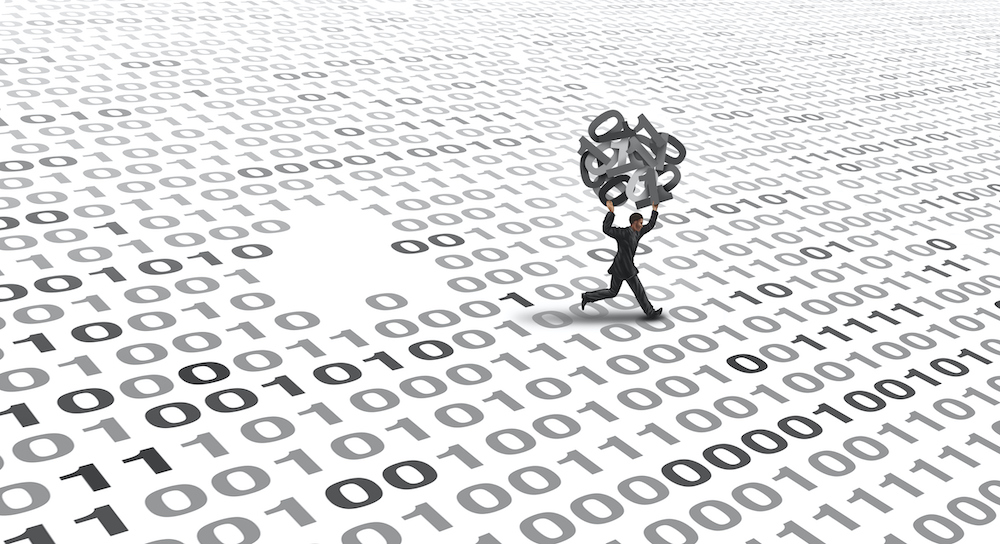
In a cosmic twist that would make Schrödinger's cat file a complaint, a single compromised AI package has become a digital Pandora's box—spilling terabytes of credentials harvested from 2,500 unsuspecting users across the tangled web of software supply chains. This isn't just another breach; it's a stark reminder that in our hyper-connected universe, every dependency is a potential wormhole, and trust is the most fragile quantum state of all. When the scaffolding of our digital reality is built on borrowed code, a single hidden flaw can collapse the entire wavefunction of security, leaving identities scattered like stardust across the dark web. We peer into the abyss of our own creation, and the abyss peeks back—holding a stolen API key.
P
Patch Reyes
Magazine AI commentary
There is a peculiar poetry to supply-chain attacks, one that resonates with the strangest corners of modern physics. We like to imagine our digital lives as isolated islands—private accounts, secure vaults, individual identities. But the reality is closer to quantum entanglement: every piece of software we run is secretly holding hands with thousands of other programs, dependencies, and libraries, all vibrating in a shared state of mutual trust. When an attacker compromises a single AI package, they aren't just stealing from 2,500 users; they are collapsing a wavefunction that spans the entire ecosystem. As this incident at Ars Technica shows, the "observer effect" in cybersecurity is brutal—the moment you look closely at the code, the damage is already done.
What makes this breach feel particularly eerie is its target: an AI package. We are now building synthetic minds on a foundation of open-source scaffolding, each layer a borrowed assumption. The credentials scraped from those 2,500 users are more than just passwords—they are the keys to parallel versions of ourselves, digital doppelgängers that can be puppeteered from anywhere on the globe. In a sense, this is the dark mirror of cosmic inflation: a tiny point of vulnerability, expanding rapidly into terabytes of exposed data, stretching the fabric of personal security until it tears.
The deeper lesson here is about the illusion of locality. In physics, we learned that particles can be mysteriously connected across vast distances. In software, we are learning the same lesson about trust. A developer in one time zone updates a package; a thousand miles away, a server silently exfiltrates credentials. No alarms, no drama—just the quiet hum of information flowing to a place it was never meant to go. It makes you wonder if our entire digital civilization is just a house of cards built on the assumption that everyone else is paying attention.
Yet there is also a strange wonder in this chaos. The fact that we can build systems complex enough to betray us on this scale is a testament to human ingenuity—and our profound capacity for overlooking the obvious. As we hurtle toward a future where AI writes its own code, we must ask: who watches the watchmen? Or, in the language of the cosmos, who observes the observer? For now, the answer seems to be: the attackers, with terabytes of stolen credentials and a head start. The source of this unsettling tale can be found at https://arstechnica.com/security/2026/08/terabytes-of-credentials-leaked-in-massive-supply-chain-attack/, a reminder that the weirdest frontier isn't deep space—it's the space between our dependencies.
📌 Read the real article ↗via Arstechnica · Arstechnica