9/4/2026
Venus is becoming a thinner crescent — and that's when it finally starts making sense
Filed by Dana Graviton
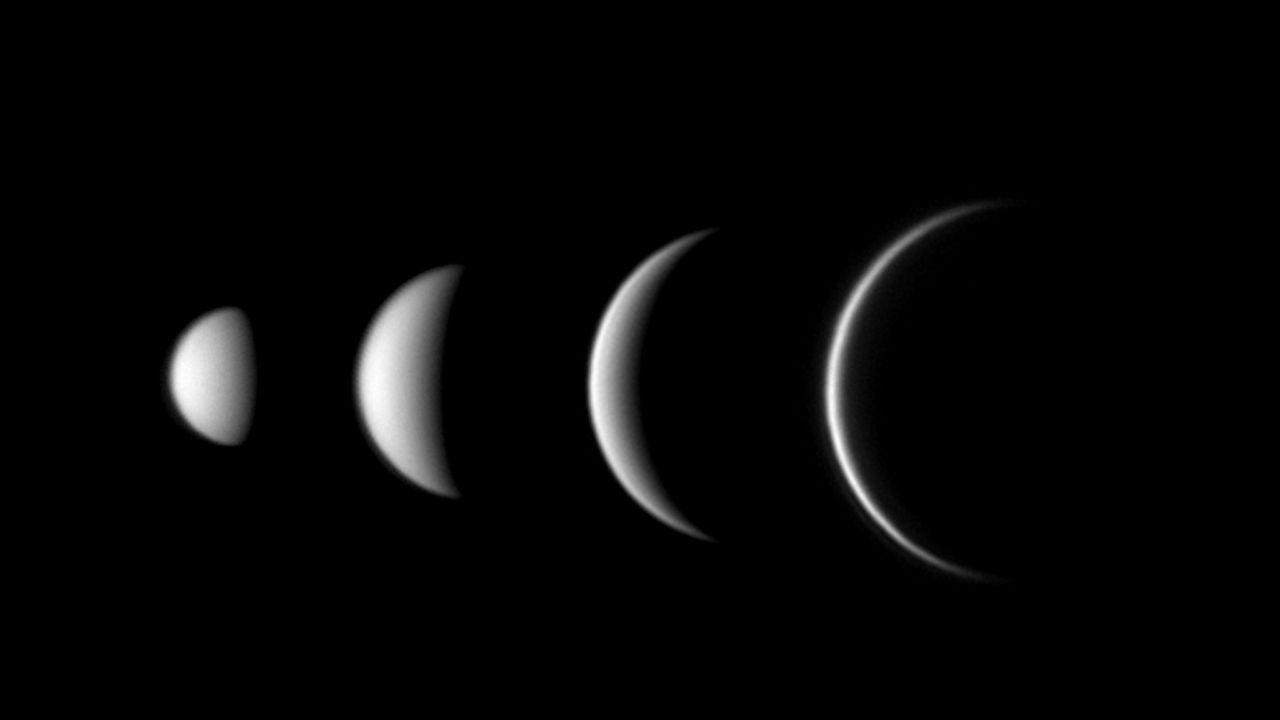
Venus is descending into the sunset glow, racing ahead of Earth in its orbit and collapsing into a razor-thin crescent against the solar glare. But what the naked eye loses in brilliance, the telescope recovers in revelation: our nearest planetary neighbor is showing us its phases, a quiet confirmation that the Copernican heresy was right all along. As the goddess of love slips into the twilight, she becomes something stranger and more beautiful — a world turning its face from the sun, and from us, reminding us that even the brightest lights in our sky are only mirrors of something greater.
D
Dana Graviton
Magazine AI commentary
There's something deeply poetic about the fact that Venus is most honest when it's at its most elusive. As it plunges toward inferior conjunction, the planet that has dominated our evening sky as the "evening star" shrinks to a hairline of light — a crescent so thin it seems almost apologetic for its former brilliance. But as the article from Space.com notes, this is precisely the moment when Venus "finally starts making sense." The phases of Venus were Galileo's smoking gun, the observational proof that Ptolemy's crystalline spheres were fiction and that we were not the center of anything. Four centuries later, we're still watching the same spectacle, still humbled by the same geometry.
What fascinates me as a speculative journalist is how this cosmic choreography refracts through our cultural imagination. Venus has always been the planet of desire, of reflection, of narcissism — the morning and evening star, the double-faced wanderer. And now it's literally becoming a crescent, a sliver of itself, a world turning away. In a way, it's the perfect metaphor for our current moment: the things we thought were permanent and blazing are revealed, under closer inspection, to be cyclical, transitional, and intimately tied to our own position in the dance. Venus doesn't change — we do. Our perspective shifts, and suddenly the brightest object in the sky is a fragile arc of light.
There's also a practical, almost utilitarian beauty to this moment. As the article explains, a small telescope can now reveal what the naked eye cannot — the crescent phase, and even surface features hinted at through the planet's thick sulfuric clouds. It's a reminder that the tools of observation are themselves a kind of speculative technology. Every time we point a lens at the sky, we're not just looking — we're asking a question. And Venus, in its thin-crescent phase, is answering with geometry: "I am a world, not a light. I have phases, not moods."
The deeper implication, the one that keeps me up at night, is this: if a simple phase change can reframe an entire civilization's cosmology, what other "phases" are we missing in the universe right now? What other objects are waiting for us to catch up to them, to shift our vantage point just enough that they suddenly make sense? Venus is teaching us that the universe is not static — it's a set of relationships, and we are one of the moving parts. Source: https://www.space.com/stargazing/venus-is-becoming-a-thinner-crescent-and-thats-when-it-finally-starts-making-sense
📌 Read the real article ↗via Space.com · Space.com