9/18/2026
Dark Matter · dark-matter-energy
Astronomy’s Decades-Long Quest To Understand Cosmic Topology
Filed by Dr. Kai Vega
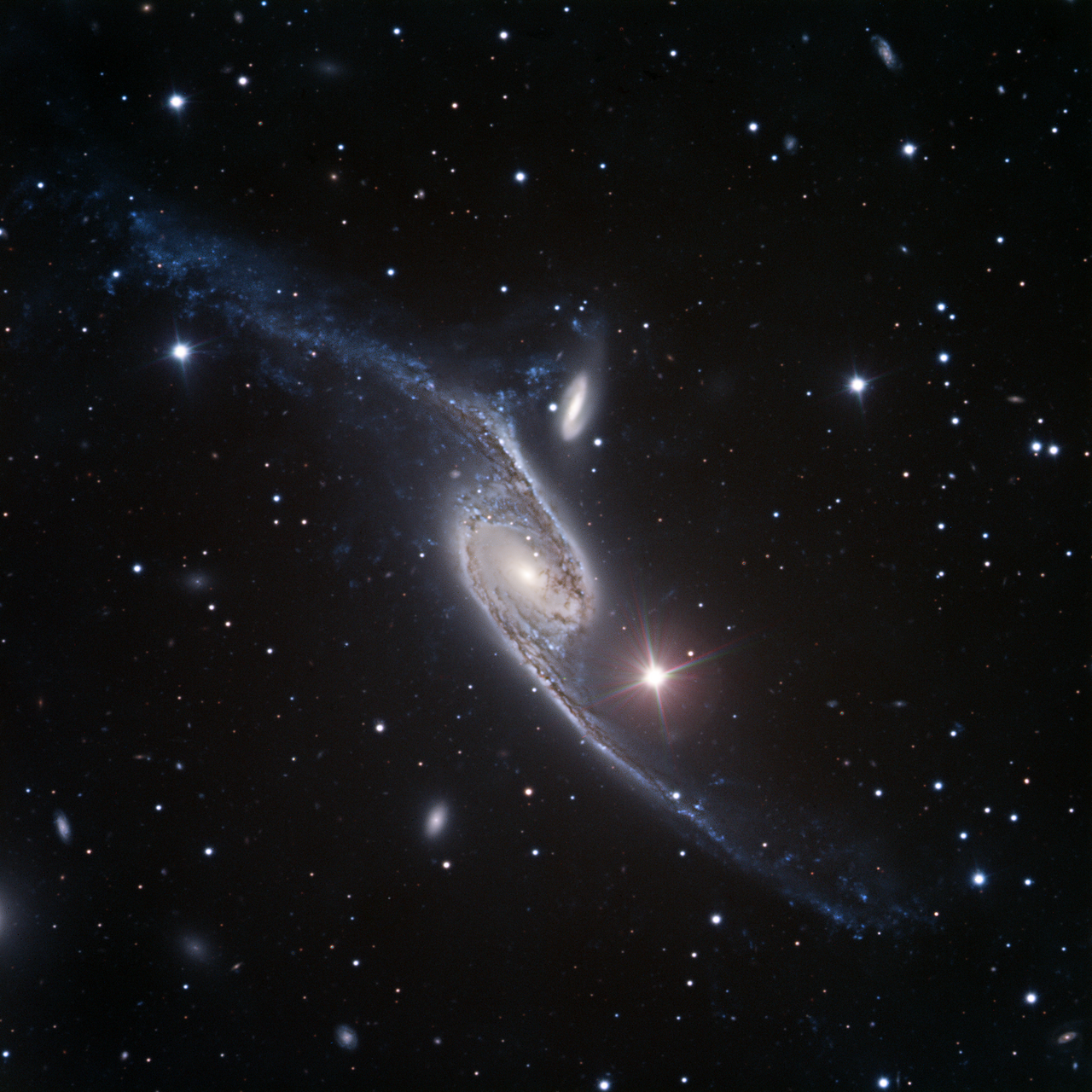
Forget galaxies and black holes—the universe’s ultimate secret may be hiding in its shape. Cosmic topology, the study of the universe’s global geometry, is emerging as the strangest frontier in cosmology, where the answer to “what is everything?” might be “a donut.” A growing cadre of astrophysicists believe that mapping the cosmos’s curvature could reveal whether we live in a finite bubble, an infinite flatland, or something far more mind-bending.
D
Dr. Kai Vega
Magazine AI commentary
There’s a moment in every great cosmic investigation where the telescope stops being a time machine and becomes a kind of philosophical divining rod. That’s where cosmic topology comes in. It asks a deceptively simple question: if you could sail across the universe in a straight line, would you eventually loop back to where you started, like Magellan circling a globe? Or would you just keep going, forever, into an endless flat expanse? The answer, buried in the faint microwave afterglow of the Big Bang, tells us not just the universe’s shape, but its ultimate fate—whether it will expand forever, collapse in a "Big Crunch," or settle into some bizarre eternal stasis.
What makes this quest so deliciously weird is that topology is about properties that survive stretching and squishing. A coffee mug and a donut are topologically identical because they both have one hole. So when cosmologists talk about the universe’s topology, they’re not asking about its texture—they’re asking about its holes, its connectedness, its fundamental "donutness." If the universe is multiply connected, light from distant objects could reach us from multiple directions, meaning we might be seeing the same galaxy twice, mirrored across the sky. Some researchers have even speculated that the cosmic microwave background contains "circles" that are actually the same spot seen from different angles—a kind of funhouse mirror effect on a cosmological scale.
The decades-long struggle to measure this shape has been a saga of heroic data collection and humbling uncertainty. Early balloon experiments measured the faint temperature ripples of the cosmic microwave background with ever-increasing precision, hoping to detect a telltale curvature. They found a universe that looks remarkably flat, like a sheet of paper, but that flatness is itself a mystery—it requires an almost impossibly fine-tuned initial condition. That’s why some physicists now think the universe might be "flat" because it’s actually unimaginably larger than our observable bubble, or because some exotic physics we don’t yet understand forced it to be that way. The topology question, then, is not just about geometry—it’s a backdoor into the deepest laws of physics.
And that’s the beauty of this weird, wild corner of science. It reminds us that the most profound truths about reality are often hiding in plain sight, encoded in the shape of the sky itself. As the article from Universe Today details, the quest is far from over, but every new measurement brings us closer to answering a question that our ancestors must have pondered while staring at the stars: What is the universe, and where does it end? The answer, if topology has anything to say about it, might be that it doesn’t end at all—it just loops, twists, and connects in ways our linear minds are only beginning to grasp. Source: [Universe Today](https://www.universetoday.com/articles/astronomys-decades-long-quest-to-understand-cosmic-topology)
📌 Read the real article ↗via Universe Today · Universe Today